
Using Poe for your Custom AI
Customizing Your AI Bot on Poe.com

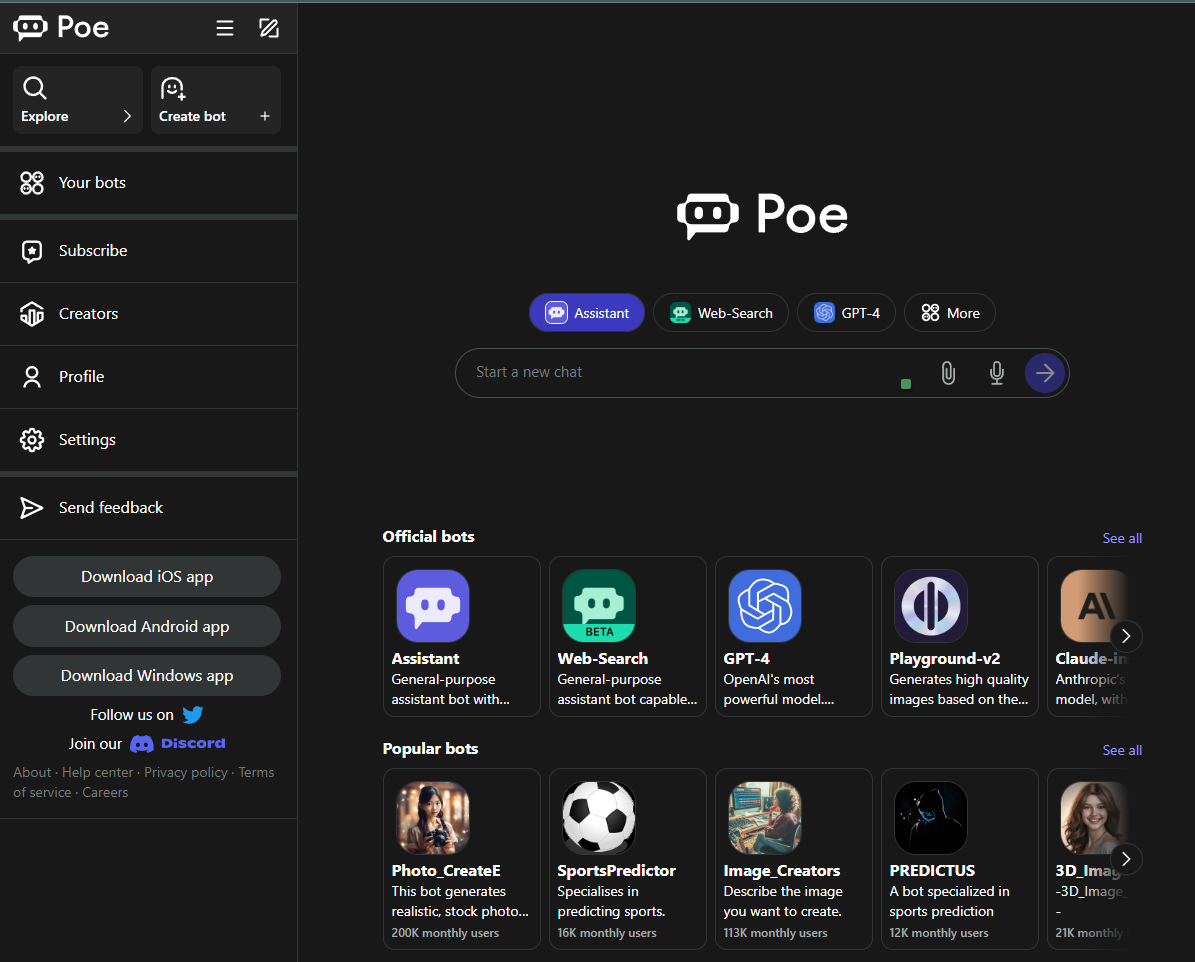
The integration of artificial intelligence (AI) into our daily lives is no longer a speculation of science fiction but a tangible reality that is rapidly transforming various professional fields, including psychotherapy. Poe.com emerges as a beacon in this technological revolution, offering a platform where fast, helpful AI chat can be a valuable asset to psychotherapists. This article sets out to demystify the process of setting up a customized AI bot on Poe.com, specifically tailored to the unique needs of mental health professionals.
As psychotherapists, the prospect of leveraging AI to improve practice efficiency is both exciting and daunting. The meticulous process of writing therapy notes, a cornerstone of therapeutic work, demands a significant portion of your time and energy—a resource that is often in short supply. By harnessing the capabilities of Poe.com, therapists can streamline this aspect of their practice, allowing them more time to focus on what truly matters: the clients themselves.
Before delving into the technicalities of setting up your AI companion, it is crucial to understand the potential impact of such technology. AI does not only offer a shortcut for administrative tasks but also introduces a new dimension of precision and consistency in maintaining therapy notes and client data. This can lead to improved client outcomes, as therapists are better equipped with accurate, comprehensive, and easily retrievable information.
In this introduction, we will pave the way for you to embark on your journey with Poe.com, from creating an account to understanding the platform's ability to enhance your therapeutic practice. We will also touch upon the imperative of navigating the ethical and privacy considerations inherent in integrating AI into a field as sensitive as psychotherapy.
By the end of this guide, you will not only be proficient in customizing and using your AI bot on Poe.com but also be at the forefront of a movement that is redefining the landscape of mental health services. Let us begin this journey towards a more efficient and effective therapeutic practice, one where technology and human expertise coalesce to create a transformative experience for both therapist and client.
Section 1: Understanding Poe.com
In the first section of our guide, we delve into the essence of Poe.com, a cutting-edge platform that bridges the gap between artificial intelligence and human interaction, specifically in the realm of psychotherapy. To utilize AI effectively, it's essential to grasp not only the technical workings of Poe.com but also its potential to enhance the therapeutic process.
What is Poe.com?

Poe.com is an AI-powered chat platform designed to offer quick and efficient conversational capabilities. For psychotherapists, it represents a tool that can assist with various aspects of clinical practice, most notably in the creation and management of therapy notes. The platform's AI is programmable, meaning it can be customized to understand and generate text based on specific professional needs, including the nuanced language of mental health.
Benefits of AI Chat Services in a Therapeutic Context
AI chat services like those provided by Poe.com can serve multiple functions in a psychotherapeutic setting:
Efficiency: AI can rapidly sift through large volumes of text, helping therapists to organize and summarize notes with unparalleled speed.
Consistency: Standardizing the way notes are written and formatted ensures clarity and eases the retrieval of information when needed.
Support: AI can alleviate the burden of administrative tasks, providing therapists more time to engage with clients.
Accessibility: With information digitized and systematically organized, therapists can access client notes and session histories from any device, at any time, ensuring critical information is always at hand.
How Poe.com Fits into Your Practice
Implementing Poe.com into your daily routine can be a game-changer. The platform is designed to be user-friendly, with a focus on minimizing the learning curve so therapists can benefit from its features from day one. Whether you're looking to enhance the note-taking process, manage appointment schedules, or streamline client communication, Poe.com's AI chatbot can be customized to address these needs.
The Importance of Privacy and Ethics
When dealing with sensitive patient information, the security of digital platforms is paramount. Poe.com acknowledges this through strict adherence to privacy standards and ethical guidelines. The platform aligns with regulations such as HIPAA in the United States, ensuring that all client data is handled with the utmost care and confidentiality. However, it is yet to be determined if is actually HIPAA-compliant. With this being said, it is best practice to avoid using client PII in your notes on Poe.
As we continue through this guide, we will explore how to navigate Poe.com, set up your account, and tailor the AI to serve your therapeutic practice effectively. With a solid understanding of what Poe.com offers, we are now ready to take the next step: creating your account and beginning the journey toward integrating AI into your psychotherapy practice.
Section 2: Signing Up for Poe.com
Embarking on the journey to integrate AI into your psychotherapy practice begins with a simple yet crucial step—creating your account on Poe.com. This section provides you with a comprehensive guide on how to sign up and start utilizing the platform's capabilities.
Creating Your Poe.com Account
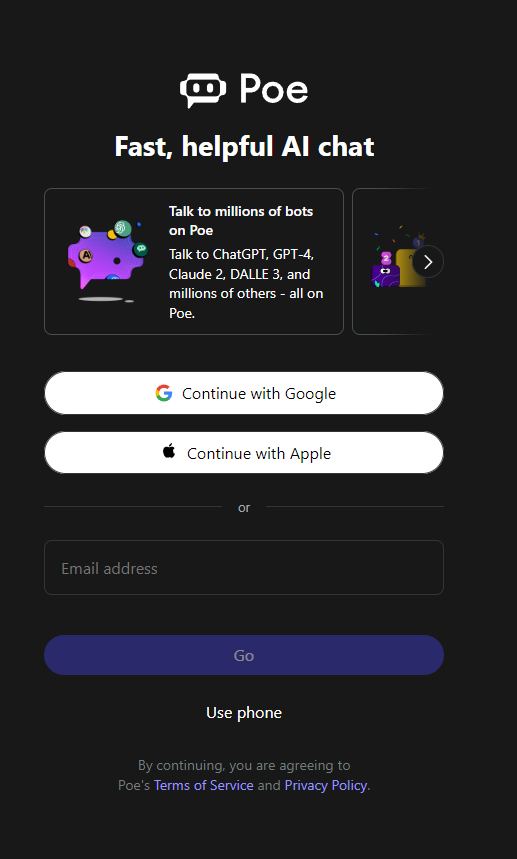
The account creation process on Poe.com is streamlined and user-friendly, offering several options to accommodate your preferences:
Continue with Google: If you have a Google account, you can quickly sign up by linking it to Poe.com. This option allows for a seamless integration with your existing Google services, such as Calendar and Gmail, which can be beneficial for scheduling and communication.
Continue with Apple: Similar to the Google option, if you're an Apple user, you can use your Apple ID to create your Poe.com account. This ensures easy access across your Apple devices and services.
Use Phone: For those who prefer not to link their Poe.com account to Google or Apple, signing up with a phone number is a straightforward alternative. This method may appeal to therapists who wish to keep their professional tools separate from personal accounts.
Regardless of the method you choose, the signup process is designed to be quick and straightforward, allowing you to move on to customizing and using your new AI assistant with minimal delay.
Section 3: Navigating the Platform
With your account set up, it's time to familiarize yourself with the Poe.com platform. This section will walk you through the initial steps of understanding the user interface and setting up your therapist profile.
Setting Up Your Therapist Profile
Your therapist profile is your professional identity on Poe.com. Here are the primary elements you should complete to ensure a comprehensive profile:
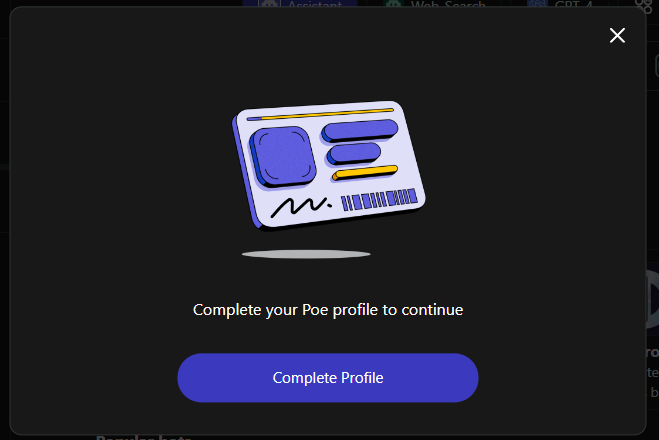
In your Bio, be sure to include the following:
Professional Information: Enter your credentials, areas of expertise, and any specializations. This helps in tailoring the AI's responses to be relevant to your practice. "Act as a psychotherapist and write …”
Contact Details: Provide your contact information for client communication and support from Poe.com.
Privacy Settings: Review and adjust your privacy settings to ensure client confidentiality and to control what information is visible to others within the platform (you have an option to hide your prompt from users).
Section 4: Customizing Your AI Bot on Poe.com
With a solid understanding of the Poe.com interface, the next crucial step is to tailor the AI bot to fit seamlessly into your therapeutic practice. Customization is key to making the AI bot a valuable tool that complements your therapy style and meets the unique needs of your clients.
Personalizing AI Responses
To begin personalizing your AI bot:
Set the Tone: Decide on the tone of the AI's responses—whether formal, supportive, or clinical—which will resonate best with your therapy approach.
Therapy Modalities: Incorporate elements of your therapeutic modalities into the AI's understanding, so it can better align with your treatment plans and interventions.
Client Sensitivity: Adjust the AI's language to be sensitive to various client backgrounds, ensuring that communication is inclusive and respectful.
Integrating Clinical Frameworks
To integrate clinical frameworks:
Evidence-Based Practices: Program the AI with terminology and constructs from evidence-based practices you utilize, such as CBT or DBT, so it can accurately reflect these in note-taking and prompts.
Therapeutic Techniques: Teach the AI about specific therapeutic techniques you employ, enabling it to assist in planning and structuring sessions.
Treatment Goals: Input client treatment goals to help the AI track progress and focus its assistance on relevant areas of client development.
Tailoring Note-Taking
For note-taking customization:
Template Creation: Develop templates for different types of sessions (intake, follow-up, group therapy, etc.) for efficient documentation.
Keyword Recognition: Program the AI to recognize and highlight keywords or themes in session notes, aiding in analysis and review.
Privacy Filters: Set filters to ensure sensitive information is handled appropriately within the notes, adhering to confidentiality requirements.
Training the AI for Your Practice
Training the AI involves:
Feeding Information: Provide the AI with general information about your practice and client demographics to fine-tune its understanding.
Correcting Errors: Actively correct any inaccuracies in the AI's output to improve its learning over time.
Feedback Loop: Regularly review the AI's performance and provide feedback to ensure it continues to learn and adapt to your needs.
Ensuring Ongoing Relevance
To maintain ongoing relevance:
Regular Updates: Keep the AI informed of any new therapy techniques, research, or changes in your practice approach.
Client Feedback: Incorporate client feedback about their comfort with the AI to make necessary adjustments.
Professional Development: As you continue your professional development, update the AI with new insights and knowledge you gain.
Customizing your AI bot on Poe.com is a dynamic and ongoing process. It requires attention to detail, a clear understanding of your therapy approach, and regular updates to ensure the AI remains a relevant and effective tool in your practice. Through thoughtful customization, the AI bot can become an integral part of your therapeutic toolkit, enhancing the quality of care you provide to your clients.
In the following sections, we will explore how to maintain the security and confidentiality of your AI-assisted therapy sessions, as well as best practices for integrating AI tools into your clinical work.
Section 5: Maintaining Security and Confidentiality on Poe.com
In the realm of psychotherapy, the protection of client information is not just a legal obligation but a cornerstone of ethical practice. As such, ensuring the highest levels of security and confidentiality on Poe.com is critical. This section will guide you through the necessary steps to safeguard your clients' sensitive data within the platform.

Understanding Poe.com's Security Measures
Poe.com employs robust security protocols to protect user data. As you start:
Review Security Features: Familiarize yourself with the built-in security features provided by Poe.com, such as end-to-end encryption, secure data storage, and multi-factor authentication.
Data Encryption: Ensure that all data, including session notes and client communication, is encrypted both in transit and at rest.
Regular Updates: Stay informed about any updates to Poe.com's security measures and how they enhance data protection.
Implementing Additional Security Practices
Beyond Poe.com's built-in features, adopt additional practices to enhance security:
Strong Passwords: Create a strong, unique password for your Poe.com account and change it regularly.
Multi-Factor Authentication: Enable multi-factor authentication to add an extra layer of security to your account.
Secure Networks: Access Poe.com only through secure and private networks, avoiding public Wi-Fi whenever possible.
Section 6: The Future of AI in Psychotherapy
As we look ahead, the intersection of AI and psychotherapy promises continued innovation and evolution. Section 8 explores the emerging trends, potential developments, and the critical conversation surrounding the balance between technology and human-centric care.

Emerging Trends in AI and Mental Health
The future of AI in psychotherapy is being shaped by several key trends:
Personalization of Therapy: AI algorithms are becoming increasingly sophisticated at tailoring therapeutic interventions to individual client needs, potentially enhancing treatment outcomes.
Virtual Reality Integration: Combining AI with virtual reality (VR) may create immersive therapeutic environments, providing new avenues for treatment, such as exposure therapy.
Voice and Facial Recognition: Advancements in these AI technologies could lead to improved assessments of clients' emotional states, providing real-time data to therapists.
Chatbots and Virtual Therapists: As AI becomes more advanced, we may see a rise in the use of therapeutic chatbots for initial screenings or as supplementary support tools.
Potential Developments in AI Tools
Looking forward, we can anticipate several exciting developments:
Predictive Analytics: AI might soon predict potential mental health crises, enabling preemptive intervention strategies.
Robotic Process Automation (RPA): This could further streamline administrative tasks, allowing therapists to dedicate more time to their clients.
Machine Learning: Enhanced machine learning models may provide deeper insights into complex mental health conditions, aiding in more accurate diagnosis and treatment planning.
Balancing Technological Innovation with Therapeutic Integrity
As AI technology advances, the psychotherapy field must maintain a focus on the therapeutic alliance:
Ethical Frameworks: Developing and adhering to robust ethical frameworks will be crucial to guide the integration of AI into clinical practice.
Client-Centered Technology: Ensuring that AI solutions are designed with the client's well-being as the primary focus.
Human Oversight: AI should be monitored by qualified professionals to ensure that it complements therapy appropriately and ethically.
The Ongoing Dialogue
The conversation between technology and psychotherapy is ongoing:
Continual Assessment: Regularly evaluating the impact of AI on the therapeutic process and client outcomes.
Professional Development: Therapists must stay informed and educated about new AI technologies and methodologies.
Client Education: Keeping clients informed about how AI may be used in their therapy and respecting their autonomy in its use.
Preparing for the Future
To embrace the future of AI in psychotherapy:
Embrace Lifelong Learning: Therapists should commit to continuous learning about AI advancements and their implications for practice.
Collaboration: Working with AI developers, researchers, and ethics boards to shape the future use of AI in a way that prioritizes client care.
Adaptive Practice Models: Developing flexible practice models that can quickly integrate new AI tools and approaches.
The integration of AI into psychotherapy is not without its challenges, but it holds the promise of significant benefits for both therapists and clients. As we navigate this future, it is imperative that we maintain the core values of psychotherapy—compassion, empathy, and human connection—while embracing the opportunities that AI presents to enhance and expand the horizons of mental health care.
In the final section, we will summarize the key points discussed in this guide and provide final thoughts on moving forward with AI in the field of psychotherapy.
Section 7: Conclusion and Moving Forward
As we conclude our exploration of AI's role in psychotherapy, it is clear that the landscape of mental health care is on the cusp of a significant transformation. This guide has traversed the various dimensions of AI integration, from enhancing therapeutic techniques to streamlining administrative processes, and has delved into real-world applications through case studies and testimonials.
Summarizing Key Points
Here are the key takeaways from our discussion:
Augmentation Over Replacement: AI should be used to complement the therapist's expertise, not replace the human elements that are critical to therapy.
Ethical Considerations: Maintaining ethical standards is paramount, especially regarding client privacy, informed consent, and transparency.
Client-Centered Care: AI tools must enhance, not detract from, the client-therapist relationship and should always be used in the service of the client's needs and preferences.
Administrative Efficiency: AI can significantly reduce the administrative burden on therapists, allowing more time for client care.
Embracing the Future
Moving forward, the integration of AI into psychotherapy requires a thoughtful and considered approach:
Stay Informed: Keep abreast of the latest research and developments in AI to make informed decisions about its application in practice.
Client Collaboration: Work collaboratively with clients when introducing AI tools, ensuring they are comfortable and understand the benefits and limitations.
Professional Collaboration: Engage with other professionals in the field to share insights, experiences, and best practices for AI integration.
Advocacy and Regulation: Participate in advocacy and regulatory discussions to influence how AI is implemented in mental health care, ensuring it serves the best interests of clients and the profession.
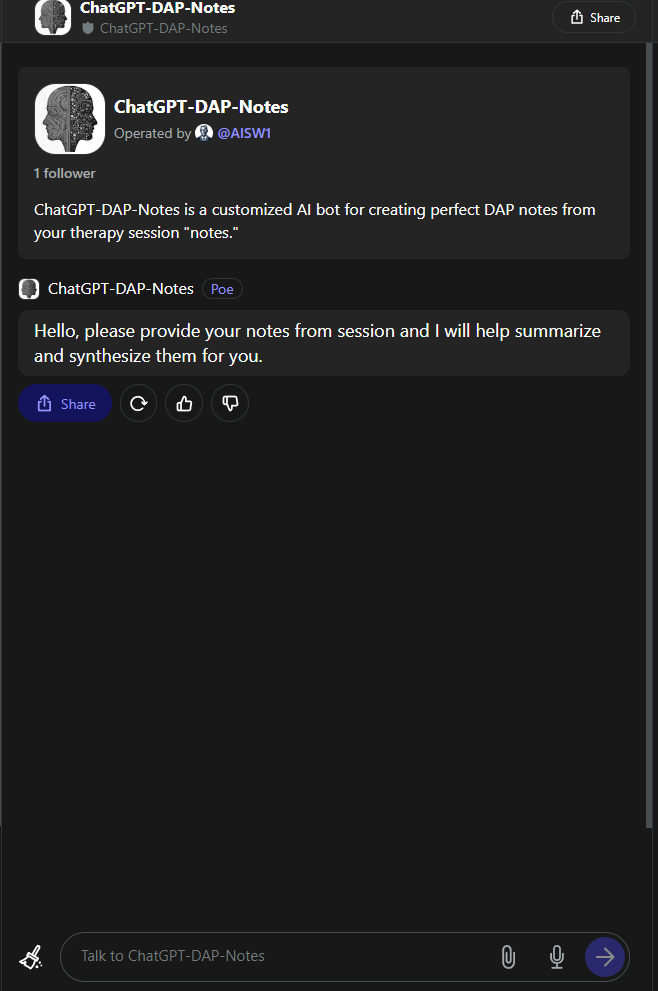
Final Thoughts
The journey of integrating AI into psychotherapy is an ongoing process of discovery, innovation, and adaptation. As therapists, our commitment to providing compassionate, effective, and client-centered care is the constant that guides this journey.
We must balance the allure of technological advancement with the wisdom that comes from years of clinical experience and the deeply human art of psychotherapy. By doing so, we can ensure that AI serves as a powerful ally in our mission to heal and to help those in need.
As we stand on the brink of this new era in mental health care, let us move forward with cautious optimism, embracing the tools that AI provides while holding steadfast to the core values that define our profession. Together, we can shape a future where technology enhances our ability to understand, connect with, and treat the diverse psychological needs of our clients.
In the spirit of progress and with a dedication to the well-being of those we serve, we welcome the advancements AI brings to the field of psychotherapy. Let us proceed with both the prudence and the curiosity that such a venture demands.